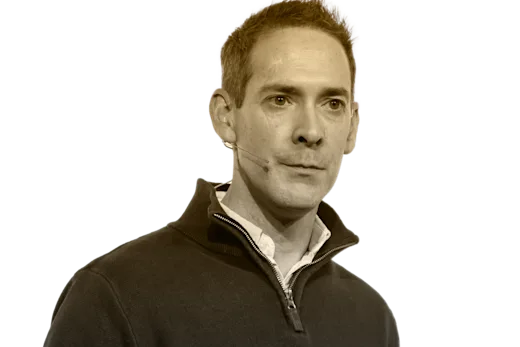
Having held leadership roles at EY-Parthenon, FTI Consulting, and Analysys Mason, Lluís has advised senior executives, investors, and policymakers on transactions, strategy, and regulation.
For Lluis, an accomplished expert in digital infrastructure, telecoms towers, fibre networks, satellite operations, and premium sports audiovisual rights strategies, explaining his breadth of expertise can often be a challenge. Operating at the intersection of telecoms, media, and sports, he bridges industries that may seem disconnected at first glance but are deeply interwoven by the rapid pace of technological change.
“I often find myself needing to tailor my position,” Lluis explains. “Sometimes I’m presenting myself as a digital infrastructure expert, other times as a sports media strategist. The connection between these worlds isn’t always obvious, but when you look closely, it’s there, 5G, streaming technologies, and even major events like the Olympics or Premier League rely on the seamless integration of these domains.”
TMT, Telecoms and Media: An Evolving Synergetic Relationship
One of Lluis’ primary areas of focus lies in the convergence of telecoms and media.
“Take the Premier League or the Olympics,” he elaborates. “The move towards streaming and IP-based distribution illustrates the role of telecoms infrastructure as the backbone of the media experience. BBC’s announcement of moving entirely to IP by 2030 or 2035 is a prime example of this shift. Without reliable, low-latency networks like 5G and fibre, these transformations simply wouldn’t be possible.”
For Lluis, this synergy between telecoms and media is what makes the TMT sector so compelling.
“The infrastructure enables innovation in media. Think about live sports, adding real-time data overlays, like the red line showing a swimming world record during the Olympics, is just the tip of the iceberg. These innovations require both cutting-edge technology and robust infrastructure to deliver the experiences audiences now expect.”
Bridging Traditional Sports/Media and Telco/Digital Transformation
Lluis’ journey began in the satellite industry, where his work with pay-TV providers first exposed him to the intersection of telecoms and media.
“Back then, football was leveraged as a key proposition to sell satellite TV,” he recalls. “It was a clear example of telecoms enabling media distribution to drive consumer engagement. That early connection shaped my understanding of how these industries complement each other.”
Since then, his expertise has expanded to encompass digital transformation in media rights.
“Today, media rights are being sold not just to traditional broadcasters like the BBC or ITV, but also to newer players like Amazon and DAZN. The market has shifted dramatically,” Lluis notes. “Understanding these changes and helping clients navigate them, whether through strategy, distribution models, or operational efficiencies, is at the core of what I do.”
Digital Infrastructure as Enabler to Sports/Media Transformation
Lluis emphasises the critical role of digital infrastructure as an enabler of transformation across industries, particularly in sports and media.
“The focus is on full 5G deployment, which provides ubiquitous, ultra-fast connectivity in gigabits per second (Gbps) with ultra-reliable (99.999%) and low-latency performance measured in milliseconds,” he explains. “This is achieved through the deployment of fibre to consumers and businesses, as well as enhanced mobile coverage, both outdoor and indoor, using small cells, distributed antenna systems (DAS), and private mobile networks (PMNs).”
In addition to connectivity, Lluis highlights the significance of advancements in data centre infrastructure.
“Developments range from hyperscale data centres to edge computing facilities, all of which are vital to supporting emerging services and applications like streaming, cloud-based solutions, and AI-powered tools.”
“These advancements require huge investments,” he notes. “Private equity, infrastructure funds, and pension funds play a critical role, but the success of these investments are dependent on innovative and creative use cases across all industry sectors that benefit and pay directly, or indirectly, for these services”.
Sports and media, Lluis observes, stand out as some of the most visible beneficiaries of digital infrastructure.
“The Sport & Media industry is one of the most visible use cases and verticals that benefit from these developments and their impact is widely reported, often in daily TV news and newspapers,” he says. “In contrast, other use cases benefiting from these advancements tend to have more niche audiences and profiles that find their way in specialist media.”
New Opportunities and Challenges for Sports Enabled by Digital Infrastructure and New Technologies
When asked about the key opportunities open to the TMT sector, Lluis uses sports as an example. Digital infrastructure is the pillar of industry transformation across the entire value chain, often with a layer of technology innovation.
Digital infrastructure directly or indirectly supports the sports industry widely across the value chain, including: using AI in scouting and securing new talented players; supporting data-driven analysis, coaching and learning for players; enhancing the audiovisual product with new 5G-powered drone cameras and real-time overlays; increasing the options for seamless distribution of the audiovisual product able to reach live audiences globally on any device; and enhancing and extending engagement with fans and supporters before, during and after the game.
When asked about the impact of the proliferation of subscription models and platforms, Lluis observes:
“Indeed, there’s a huge proliferation of channels now. While it offers more choice, it complicates strategy for rights holders and broadcasters. Building partnerships with a few key players yields the most immediate value and it should be nurtured accordingly, but direct-to-consumer models are gaining traction too for long-term fan engagement and should also be an important element of the strategy.”
When asked about European sports adoption of AI, Lluis considers that:
“The sports industry has always been an early adopter of new technology and developments. US main sports leagues seem to be leading the way in AI transformation. There is an opportunity for European sports to be more proactive in exploring how AI can enhance their business model throughout.”
However, these trends also bring risks. Lluis points to piracy as a persistent issue, especially with the rise of streaming.
“Piracy has always been a concern, but with streaming, the risks are higher and harder to manage,” he explains. “The response involves three stages: offering affordable options to discourage piracy, targeting platforms that enable piracy, and prosecuting individuals who consume pirated content. It’s a multi-faceted approach that requires collaboration across the industry.”
The Opportunity and Threat of the Globalisation of Sports and Media
Globalisation is another major trend shaping the TMT landscape.
“For premium properties like the Premier League or LaLiga, international media rights now rival domestic rights in value,” Lluis explains. “That’s a significant shift. It’s forcing rights holders to think more globally, not just about tailoring their strategy on how they monetise their product domestically with an international bolt on but also how they enhance the product and monetisation more holistically for a much larger international audience that is more accessible than ever via global streaming players and social media platforms.”
Lluis also highlights that globalisation brings the opportunity to increase the number of international matches and tournaments.
“From the expansion of UEFA’s Champions League to FIFA’s plans for an expanded Club World Competition, there’s a clear push towards globalisation. But this creates tensions around player health, scheduling, and maintaining the quality of domestic leagues. A threat that requires careful balancing of these priorities. This has become one of the biggest challenges the sports industry faces.”
Final Thoughts
For Lluis, the TMT sector is defined by its constant evolution and interconnected challenges. Within TMT, the synergetic relationship between telecoms/digital infrastructure and sports/media creates a unique and dynamic ecosystem where innovation is both a necessity and an opportunity. This relationship, together with many technology innovations, has already evolved significantly over the past decades and will continue to do so in the coming ones, if anything at a faster pace.
“Whether it’s telecoms digital infrastructure enabling media innovation or the globalisation of sports driving new opportunities, these industries are deeply linked